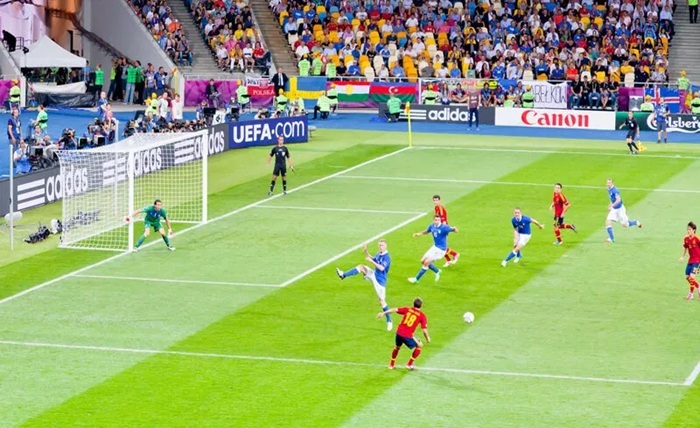
Counter‑attacking teams in Serie A 2016/17 thrived by defending compactly, absorbing pressure and then breaking quickly into space, turning the league’s tactical diversity into sudden, high‑value transitions. For bettors, those patterns mattered most in “who scores first” and “who scores last” markets, because the timing of counters was heavily driven by game state: some sides were more likely to strike first against dominant opponents, while others tended to come alive only when the match opened up later.
Why counter‑attacking profiles matter for first/last goal bets
First/last goal markets are essentially bets on which team’s tactical identity will appear on the scoreboard first, and whose approach is better suited to late‑game conditions. Counter‑attacking sides sit at the heart of that discussion because their plan relies on specific conditions: space behind an opponent’s defence, recoveries in midfield and quick vertical play. When those conditions appear early, they can score the opener against more talented sides; when they appear only after the favourite pushes forward, they become more dangerous late.
Performance research on Serie A 2016/17 shows that match outcomes were closely linked to high‑intensity running, repeated accelerations and the efficiency of offensive transitions. Teams that excelled in turning defensive actions into fast attacks were more likely to create good chances directly from turnovers, which often led to goals that seemed to come “out of nowhere” compared to slower, positional play. For first/last goal bettors, understanding which clubs leaned on that pattern was more valuable than focusing solely on possession or shot volume.
What counter‑attacking success looked like in 2016/17
In practical terms, a successful counter‑attacking team in 2016/17 Serie A showed three recurring traits. First, they defended in a mid‑ or low block, prioritising compactness in central areas and inviting opponents to advance, creating exploitable space behind. Second, they relied on quick, direct links from ball‑winning zones to forwards or wide runners, often using one or two long vertical passes rather than elaborate build‑up. Third, they fielded players with pace and timing in forward positions, able to exploit even small gaps as soon as the ball was recovered.
Performance studies on high‑level football highlight that offensive transitions – the few seconds immediately after regaining possession – are one of the most decisive phases in modern matches. In 2016/17’s Serie A, those transitions were especially important for mid‑table and underdog sides that could not dominate the ball against the top three; their best route to goals was to let stronger opponents commit men forward and then break quickly into the spaces those attacks left behind. That created a natural link between their tactical identity and their propensity to score either the first goal (if the favourite started aggressively) or the last goal (if the match broke open late).
How counter‑attacking styles shaped early vs late goals
Not all counter‑attacking teams behaved the same way across 90 minutes. Some were “ambush” sides that pressed selectively high in the opening phase, hoping to win the ball in midfield while the favourite was still adjusting and then score early through a rapid break. Others sat deeper at the start, preferring to survive early pressure and only unleash their counters once the favourite was committed forward chasing a goal or protecting a narrow lead.
Research on match running and outcomes in Serie A 2016/17 suggests that winning teams tended to sustain higher high‑intensity distances and more repeated sprints throughout matches, particularly in late phases. For counter‑attacking clubs with strong fitness, that meant they could still spring dangerous breaks in the final 15–20 minutes, when opponents were both tired and more stretched. Those sides became natural candidates to score last, especially in games where they had trailed or drawn for long periods but retained pace on the bench or in wide roles.
Mechanisms: when counter teams are more likely to score first vs last
The underlying mechanism can be summarised conditionally. A counter‑attacking team is more likely to score first when:
- The opponent begins aggressively with a high line;
- The underdog wins several early duels in midfield;
- The first clean break arrives before the favourite can reorganise their rest defence.
By contrast, they are more likely to score last when:
- The favourite takes a lead and then continues to attack instead of closing the game;
- Fatigue reduces the favourite’s counter‑pressing effectiveness;
- The underdog keeps at least one fast outlet on the pitch or introduces one from the bench late.
In both cases, the same tactical identity – ceding territory, then attacking space – drives very different first/last goal outcomes depending on how the match unfolds.
Using a structured table to connect counter profiles to first/last goal markets
Instead of trying to label every 2016/17 team, it is more practical to work with archetypes that describe how counter‑attacking styles interact with match state. The table below aligns common Serie A 2016/17 counter‑team types with first/last goal tendencies, based on how they typically approached matches in a league where intensity and transitions showed strong links to success.
| Counter‑attacking archetype (2016/17 style) | Typical game plan | More natural edge: score first or score last? |
| Mid‑table counter unit vs big away favourite | Compact block, early focus on fast breaks | Higher chance to score first if the favourite overcommits early |
| Relegation struggler with one fast forward | Deep block, hopeful long balls, late gamble | More likely to score last in chaotic closing stages |
| European‑chasing side using controlled counters | Alternates between possession and structured breaks | Balanced; depends on game state and opponent style |
| Big club using counters vs another giant | Mid block and transition play in high‑profile games | Often last, as late counters decide tight matches |
This framing matches broader findings that successful offensive transitions in top‑level football tend to occur either early, when the opponent’s structure is not fully settled, or late, when space opens and fatigue bites. For bettors, the archetype helps translate tactical cues into specific “team to score first” or “team to score last” options instead of treating counter‑attacking as a vague label.
How to build a pre‑match plan around counter‑attacking cues
When approaching a 2016/17‑style Serie A fixture from a pre‑match perspective, the first step is to identify whether either team relies structurally on counter‑attacks. Signs include frequent use of mid‑ or low blocks, reliance on pace up front, and lower possession shares despite decent shot quality. The second step is to analyse the opponent’s expected approach: will they push full‑backs high, play with a high line and commit numbers early? If so, the counter‑attacking side becomes a more serious candidate to score first, especially if they favour early pressing triggers around wide areas or central turnovers.
The third step is to consider game incentives. In matches where a draw suffices for the counter‑team but the opponent needs a win, the favourite is likelier to take risks late, increasing the underdog’s chances of scoring last via counters as the game breaks up. Performance analysis from the 2016/17 season shows that teams with higher high‑intensity output could maintain threat deeper into matches, which made their counters particularly dangerous against tiring favourites. Combining these elements, a bettor can treat “score first” and “score last” as reflections of when a particular counter unit’s strengths line up most cleanly with the expected game script.
Using casino online logic to manage first/last goal risk
From an operational standpoint, thinking in terms of a casino online environment – many small strategic decisions rather than a few big gambles – is useful when dealing with inherently volatile first/last goal bets. Counter‑attacking goals are by nature high‑variance events: they depend on small margins in duels, timing and finishing. Treating each selection as one step in a larger series, rather than as a high‑stakes shot, keeps focus on matching tactical profiles to odds instead of chasing dramatic narratives.
In a menu that offers multiple first and last goal markets across all Serie A fixtures, the disciplined approach in a 2016/17 context is to shortlist only those games where the counter‑attacking blueprint is clearly present and the opponent’s style is likely to pull the match into the right conditions. That might mean backing an underdog to score first in a specific away game where the favourite attacks recklessly, or backing a mid‑table counter side to score last in a game where a top club is expected to push until the final whistle, leaving space for a late break. By distributing risk across many such situations rather than concentrating it, you mirror the probabilistic nature of transitions themselves.
Where a betting platform’s structure helps apply counter insights
The way a modern betting platform organises markets can either obscure or highlight tactical edges. When first/last goal options are buried behind more popular 1X2 and totals lines, it takes deliberate effort to reach them. For a bettor aiming to exploit counter‑attacking patterns in a season like 2016/17, that effort is often rewarded precisely because casual money rarely flows into those specialised markets with the same volume.
In that sense, thinking about a multi‑market sports betting service like ufa168 clarifies how interface structure shapes decisions. When a site presents goal‑timing markets alongside team‑specific props and in‑play options, it becomes easier to express a precise view – “this counter‑attacking side is more likely to score last than first today given how the favourite plays” – rather than forcing that view into a standard result bet. Using that structural flexibility, a bettor can isolate the part of the game where counter strengths matter most, instead of being exposed to all 90 minutes equally.
Where counter‑attacking assumptions can fail in first/last markets
Even well‑grounded counter‑attacking reads can go wrong in several predictable ways. One is misjudging the favourite’s risk appetite: if a supposedly expansive opponent chooses a cautious approach, the underdog’s space to counter shrinks, weakening the case for both early and late breaks. Another is overestimating fitness or depth; performance research on 2016/17 underscored that sustained high‑intensity output was critical to success, and teams lacking rotation or conditioning often faded badly, making their transitions less effective exactly when bettors expected them to be most dangerous.
There is also the factor of game‑state randomness: an early red card, penalty or deflection can flip roles, forcing a counter side into unexpected possession or pinning them back so deeply that their usual transition patterns never appear. And as with any specialised market, prices adjust when patterns become obvious; if a team builds a reputation for dramatic late counters, bookmakers can shade “score last” odds downward, compressing the value the pattern once offered. Treating counter‑attacking identity as one variable among many – and continuously checking it against form, injuries and tactical changes – is essential to avoid chasing an edge that the market has already priced in.
Summary
In Serie A 2016/17, counter‑attacking teams leveraged compact defensive structures and rapid offensive transitions to turn opponents’ possession into sudden, high‑quality chances, with match‑running and transition studies showing how decisive those moments were for results. For bettors operating in first/last goal markets, understanding how those styles interacted with opponent approaches and game states made it possible to target specific fixtures where underdogs were more likely to strike first against early pressure, or to score last when favourites overcommitted late. When combined with disciplined stake sizing and thoughtful use of specialised markets on modern betting services, counter‑attacking profiles became a practical, repeatable tool for navigating the timing‑based “score before / score after” landscape rather than just another attractive tactical buzzword.