In our daily lives, we engage with countless mechanisms, systems, and digital processes without a second thought. We insert a card into a slot and slot it home to make a payment. We book a time slot and slot our meeting into a crowded calendar. We watch a coin descend through a slot and slot machine’s intricate pathways. This deceptively simple pair of words—one a noun describing an opening or allocated space, the other a verb describing the action of placing something into that space—forms a fundamental principle of organization, mechanics, and technology. To understand the concept of slot and slot is to understand a hidden language of efficiency and connection that shapes our world. This relationship between the space and the action is not merely functional; it is a dance of precision that enables complexity to arise from simplicity, governing everything from furniture assembly to data transmission.
The Mechanical Genesis: Slot and Slot as Physical Ingenuity
The most tangible manifestation of the slot and slot principle is in the realm of physical objects. Here, the slot is a deliberate void—a groove, channel, or aperture designed with intent. The act of slotting is the fulfillment of that intent, a precise engagement that creates structure, transmits force, or allows movement. Consider the humble flat-pack bookshelf. Each shelf has a series of small, rectangular slots cut into its sides, and the cabinet’s vertical panels have corresponding tabs. You carefully slot and slot each piece together, transforming a chaotic pile of board into rigid, load-bearing furniture. This ancient technique, seen in classic woodworking joints like the mortise and tenon, is pure slot and slot engineering: a precisely cut cavity (slot) accepts a precisely shaped projection (slotting it into place), creating strength through interlock without the need for excessive fasteners.
This principle scales dramatically. In a massive steam turbine, the blades are anchored into the rotor’s disc via complex root slots. Engineers must perfectly slot and slot each blade to ensure balanced, safe rotation at thousands of revolutions per minute. The entire assembly relies on this meticulous slot and slot integrity. Even the simple act of a key turning in a lock is a refined slot and slot operation. The key’s unique ridges align with the pin tumbler slots inside the cylinder. When you slot it in correctly, the internal components align, allowing the mechanism to turn. Every mechanical slot and slot interaction is a testament to foresight, demanding that the form of the inserted object and the nature of the receiving space are in perfect harmony for the system to function.
The Digital Translation: Slot and Slot in Computing Architecture
When we transition from the physical to the digital world, the slot and slot metaphor not only persists but becomes a foundational paradigm. Inside your computer, expansion slots on the motherboard—PCI Express slots being the modern standard—provide standardized openings for data and power. To upgrade your graphics capability, you purchase a card and slot and slot it firmly into one of these connectors. This physical slotting action creates a logical pathway, enabling the CPU to communicate with the new GPU at breathtaking speeds. The slot here is both a physical receptacle and a digital protocol, a designated lane on the data highway. The act to slot is the integration of a new function into a larger, cohesive system.
This concept extends into software and data management. In programming, a data structure like a hash table uses a “hashing” algorithm to calculate a slot—a specific index in an array—where a piece of information should be stored. The program will then slot and slot the value into that computed location for near-instant retrieval later. Memory allocation itself is a process of finding an available slot in RAM and slotting the application’s data into it. Even in user interfaces, we see this logic. A content management system for a website has designated slots for a header image, a title, and body text. The user’s job is to slot and slot the appropriate content into each of these digital compartments, structuring information for the web. Thus, the digital slot and slot is the indispensable mechanism for modularity, upgradeability, and structured data handling.
Temporal Slots: The Framework of Modern Time
Perhaps the most pervasive application of this concept in our daily experience is the temporal slot. Time, an invisible continuum, is segmented into manageable, abstract slots: 15-minute appointments, one-hour meetings, 30-minute TV programs, two-week development sprints. These slots are intangible but fiercely guarded compartments in our schedules. The verb then becomes the act of planning and commitment. We look at our calendar, find an open slot, and slot and slot a dentist appointment into next Tuesday at 3 PM. Project managers slot milestones into a Gantt chart. Broadcasters slot programs into prime-time or late-night slots.
The power—and stress—of the temporal slot and slot system lies in its scarcity and consequence. Double-booking occurs when we try to slot two items into one slot, causing systemic failure. The “golden slot” in advertising, like during the Super Bowl, commands a premium because its potential audience impact is immense. Our entire professional culture often runs on the efficiency of this slot and slot paradigm, aiming to maximize the value extracted from each chronological container. It imposes order on chaos, but it also compartmentalizes our lives, asking us to slot our creativity, our conversations, and our rest into predetermined boxes. Mastering the temporal slot and slot is thus a key skill in modern society, a dance with the clock that dictates the rhythm of our days.
The Economic and Entertainment Engine: Casino Slots and Scheduling Slots
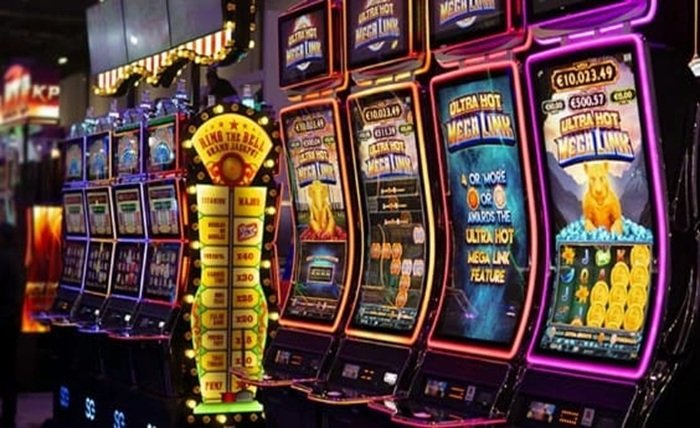
The phrase “slot and slot” finds a uniquely literal and cultural home in the gambling industry, with the slot machine. Originally, these were mechanical devices with a slot for coins and internal reels that would “slot” into alignment when a lever was pulled, creating winning or losing combinations. Today’s digital video slots are software-powered, but the core ritual remains: you slot in money (or a ticket) to purchase spins, and the random number generator determines how the symbols slot onto the payline. The entire experience is engineered around the psychology of the slot and slot cycle—the anticipation as reels spin, and the brief moment they slot into their final positions to reveal the outcome.
Beyond the machine itself, the business of gambling runs on scheduled slots. High-roller tables may have reserved time slots. Tournament play is organized into slots. This duality makes the casino a perfect microcosm of the slot and slot principle: physical machines with literal slots, operating within an ecosystem of tightly managed temporal slots for events and financial slots for betting limits. The parallel in entertainment is broadcast scheduling. A network has a nightly programming slot from 8:00 PM to 8:30 PM. They must decide which show to slot and slot into that valuable real estate—a decision worth millions, based on which program they believe will slot most effectively into the viewing habits of their target demographic, capturing the audience’s attention in that specific temporal slot.
Communication and Signal Slots: The Invisible Highway
Our connected world relies on a hidden, high-stakes game of slot and slot that happens millions of times per second. In telecommunications and network engineering, a slot is a unit of transmission capacity or a time interval in a shared medium. In Time-Division Multiple Access (TDMA) systems, used in some older cellular networks and satellite comms, time is sliced into repeating frames, and each user is assigned a specific time slot within that frame. Your phone’s signal is only allowed to transmit during its designated slot, and the base station must precisely slot and slot all these conversations together to prevent interference. It’s a temporal slot and slot system operating at the speed of light.
Similarly, in modern wireless standards like Wi-Fi, the protocol uses a concept of contention-based slots for devices to talk without colliding. A device will wait for a random backoff slot before transmitting. In fiber-optic networks using wavelength-division multiplexing, each data stream is assigned a specific color (wavelength) slot on the light beam. The transmitting laser must slot and slot the signal precisely into its allocated color channel. These technical implementations are the ultimate expression of the slot and slot concept: creating order in a chaotic, shared space (the electromagnetic spectrum) by meticulously assigning and managing abstract slots, ensuring that every byte of data, every voice packet, and every video stream can be accurately slotted into place for its journey and correctly slotted back together at its destination.
Cognitive Slots: How Our Minds Slot Information
The slot and slot model is not just an external technology; it appears to mirror an internal cognitive architecture. Pioneering psychologist George A. Miller’s concept of “The Magical Number Seven, Plus or Minus Two” suggested that working memory has a limited number of slots for holding discrete chunks of information. We can only keep about seven items (like digits or words) actively in mind at once. Our consciousness must constantly choose what to slot and slot into these scarce mental slots. This is why a phone number is chunked into segments—it’s easier to slot “555-867-5309” into memory as three chunks than as ten separate digits.
This cognitive slot and slot mechanism underpins learning and schema theory. We develop mental frameworks, or schemas, for concepts like “restaurant” or “airport.” These schemas have slots for expected information: for a restaurant, slots for host, menu, server, bill. When we enter a new restaurant, we slot and slot the observed details into these pre-existing slots, allowing for efficient comprehension and prediction. Language itself works this way; sentence structures have grammatical slots for a subject, verb, and object. We slot the appropriate words into these slots to generate meaning. Thus, the way we think, remember, and understand the world may be fundamentally structured around an internal, biological version of the slot and slot process, organizing the flood of sensory data into manageable, categorical compartments.
The Future of Slot and Slot: From Quantum to Metaphysical
As technology and society evolve, the slot and slot principle continues to find new expressions. In quantum computing, the concept of a slot may transform into the state of a qubit, where information isn’t just slotted as a 1 or 0 but can exist in a superposition, challenging the traditional binary slot. In logistics, autonomous warehouses use dynamic slotting, where inventory slots are not fixed but constantly re-optimized by AI, and robots slot and slot products into the most efficient location in real-time based on predictive demand.
On a societal level, we grapple with the slot and slot dynamics of identity and belonging. Do we feel pressured to slot and slot ourselves into predefined social, professional, or gender slots? The modern push for fluidity and deconstruction can be seen as a resistance to rigid slotting, a desire for spaces and identities that are more adaptable and less confined to fixed slots. Conversely, the human need for narrative seeks to slot events into the slots of a story—beginning, middle, end, cause and effect—to create meaning from chaos.
From the tangible click of a puzzle piece fitting into place to the abstract allocation of a nanosecond on a global network, the interplay of slot and slot is a ubiquitous grammar of construction and order. It is the silent partner in our mechanics, the invisible hand in our schedules, the hidden architect of our networks, and possibly even a blueprint for our thoughts. To notice the slot and slot is to see a fundamental pattern of reality, one where spaces are made to be filled, actions seek their purpose, and the dance between the two creates everything from a sturdy chair to the organized, pulsating complexity of the digital age. It is a reminder that sometimes, the most profound ideas are hidden in the simplest of grooves and the most basic of actions.